


CoreWeave’s IPO: A Reality Check for the AI Hype or a Strategic Growth Play?
- Yiwang Lim
- Mar 27, 2025
- 2 min read

Updated: Mar 31, 2025
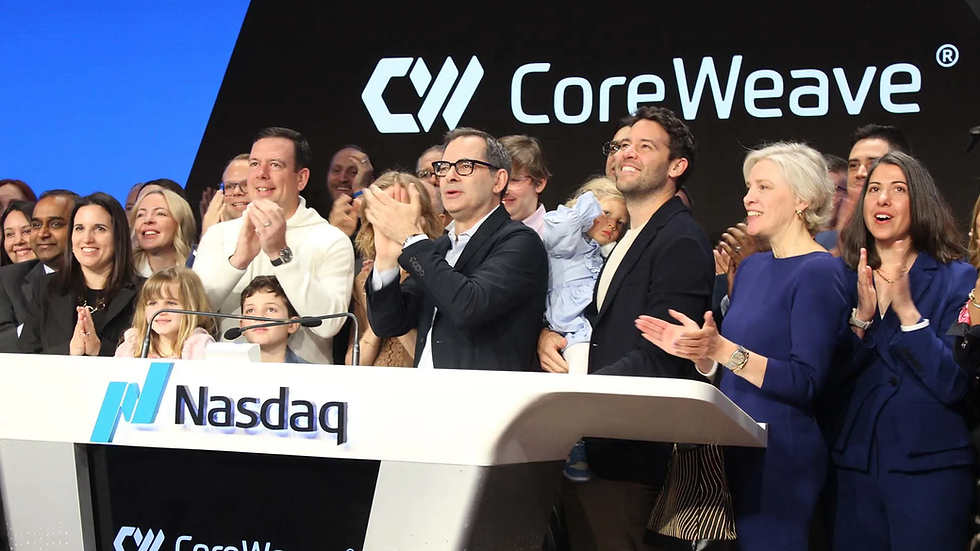
CoreWeave's recent initial public offering (IPO) has garnered significant attention, not only for its implications within the artificial intelligence (AI) infrastructure sector but also for the broader investment community assessing the sustainability of AI-driven ventures. Founded in 2017 by commodities traders Michael Intrator, Brian Venturo, and Brannin McBee, CoreWeave transitioned from cryptocurrency mining to becoming a pivotal provider of GPU-accelerated cloud computing services. This strategic pivot capitalized on the surging demand for AI processing power, positioning CoreWeave as a formidable competitor to established hyperscalers like Microsoft and Amazon.
IPO Performance and Financial Structure
On March 28, 2025, CoreWeave debuted on the Nasdaq under the ticker symbol "CRWV," pricing its shares at $40—below the anticipated range of $47 to $55. The company raised approximately $1.5 billion, achieving a market valuation of $23 billion, which fell short of initial expectations. This subdued market reception reflects investor apprehensions regarding CoreWeave's substantial debt load and concentrated revenue streams.
Revenue Growth and Customer Concentration
CoreWeave's revenue trajectory has been remarkable, escalating from $16 million in 2022 to $1.9 billion in 2024. However, this growth is tempered by significant customer concentration risks. In 2024, Microsoft accounted for approximately 62% of CoreWeave's revenue, with the top two customers contributing 77% collectively. Such dependency exposes CoreWeave to potential volatility should any major client alter their engagement.
Debt Obligations and Financial Risk
The company's aggressive expansion strategy has been financed through considerable debt, totaling around $8 billion as of 2024. This leverage introduces substantial financial obligations, including nearly $1 billion in annual interest payments. The debt is secured against assets such as Nvidia GPUs, which are subject to depreciation, adding another layer of financial risk.
Strategic Partnerships and Market Position
CoreWeave has cultivated strategic relationships to bolster its market position. Notably, Nvidia has invested in CoreWeave and participated in the IPO with a $250 million order, reinforcing the symbiotic relationship between the two entities. Additionally, a five-year, $11.9 billion contract with OpenAI diversifies CoreWeave's client base and mitigates some revenue concentration concerns.
MY ANALYSIS
From an investment standpoint, CoreWeave presents a complex profile. The company's rapid revenue growth and strategic industry partnerships are promising. However, the high debt levels and customer concentration pose significant risks. The AI infrastructure sector is capital-intensive, and CoreWeave's ability to manage its financial obligations while sustaining growth will be critical. Investors should weigh the potential for continued expansion against the backdrop of financial leverage and market competition.
In conclusion, CoreWeave's IPO serves as a litmus test for market confidence in AI infrastructure ventures. While the company's trajectory showcases the immense opportunities within the AI sector, it also underscores the importance of prudent financial management and strategic diversification to navigate the inherent risks.


Comments